

People Knew
A child-protection crisis is forcing France to confront what it chose not to see

I have made a large part of my career out of taking the best of France and showing it to the outside world as inspiration.
Refinement. Style. Cinema. Travel. Cheese. Haircuts. Architecture. The art of living.
France sits at or near the top of the cultural pyramid in all these areas and more.
And yet there are certain things drastically wrong with my adoptive country. Ignoring them feels increasingly dishonest.
Particularly right now. Because France is in the throes of a child-protection crisis so disturbing that it deserves attention not only from French citizens, but from anyone who cares about how societies protect their most vulnerable members.
(Content note: this essay discusses child sexual abuse.)
Before I explain what is happening, a story.
When I first enrolled my daughter at our local Paris kindergarten, another parent offered an unexpected piece of advice. If we could possibly afford it, she said, avoid périscolaire—the after-school and lunchtime programmes run by the city. Instead, hire someone to take the children to the park.
Why?
“Because that’s where the pedos are.”
I remember being shocked. I assumed she was exaggerating. Repeating one of those urban myths that circulate among anxious parents.
As it turns out, though I kept our nanny on for after school, our own périscolaire programme appears to be absolutely fine. The people caring for our children at lunch hour are largely kind, attentive and professional. I have no reason to believe otherwise.
Which somehow makes that conversation from a few years ago even stranger.
The warning wasn’t about a particular school. It was about a pattern. And it was delivered with the sort of shrug usually reserved for discussing the weather. Not as a conspiracy theory…as common knowledge.
That conversation came back to me this week.
For more than a year, allegations have accumulated against animateurs—municipal employees responsible for supervising children, including children as young as three, at school breaks and extracurricular activities. Prosecutors are investigating allegations ranging from physical violence to sexual assault and rape. More than one hundred educational establishments have been touched by investigations while 78 of staff members have been suspended in Paris alone.
Parents’ groups argue that the real scandal is not only what allegedly happened to children, but the repeated failure of authorities to respond when concerns were raised.
The cases differ, but a pattern emerges repeatedly: complaints not treated with urgency, warning signs missed, adults remaining in contact with children after concerns had already surfaced. What initially appeared to be a series of isolated incidents increasingly looked like something else.
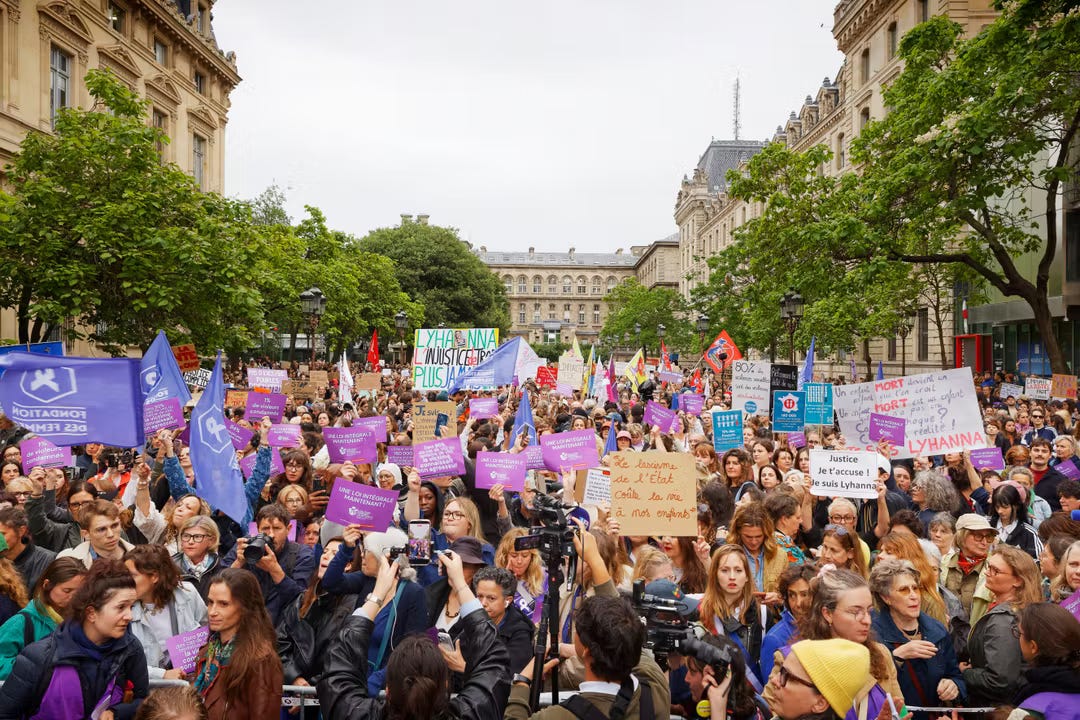
Then came Lyhanna. On May 29, an 11-year-old girl from Fleurance in southwestern France disappeared after leaving school. Days later, her body was found in an abandoned barn. A 41-year-old local man, Jérôme Barella, was arrested and placed under investigation.
The horror of the crime alone would have made national headlines. What transformed it into a political and judicial crisis was what emerged afterwards.
Barella was not unknown to authorities. According to prosecutors and subsequent reporting, he had been the subject of multiple previous allegations involving sexual violence against minors. Several girls had reported him over the years. A more recent complaint involving a child had still not resulted in him being questioned by police before Lyhanna disappeared.
The details are almost unbearable.
Barella was reportedly the father of one of Lyhanna’s friends. The families had crossed paths for years through school activities. Lyhanna’s mother later said she had become uncomfortable with his behaviour after her daughter described him tickling her during a sleepover at his house. She told Lyhanna not to see him again. Yet the family later learned he was frequently near the school and would give her snacks.
As journalists reconstructed the suspect’s history, the question quickly ceased to be whether warning signs existed. The question became why they were not enough.
And that question has landed in a France already reeling from the périscolaire affair.
This is where this story becomes larger than either case. Because France has spent the past decade repeatedly discovering the same thing: people knew.
The recurring scandal is not simply abuse, it is the normalization of knowledge about abuse.
People knew about Gabriel Matzneff, the celebrated writer who openly described sexual relationships with minors for decades while much of the literary establishment looked away. People knew before Vanessa Springora published Le Consentement.
There were rumours before Camille Kouchner’s La Familia Grande exposed incest within one of France’s most prominent intellectual families.
Again and again, France has been forced to revisit scandals emerging not from the margins of society but from its cultural centre: elite schools, publishing houses, influential families, intellectual circles.
The geography matters. From Saint-Germain-des-Prés over to Rue du Bac, these stories challenge a national self-image in which intellectual sophistication was assumed to travel alongside moral enlightenment.
Instead they reveal something more troubling: environments where status, influence and social capital can discourage scrutiny.
This is also why the current moment inevitably raises questions about the legacy of certain strands of post-1968 culture. Not the emancipatory ideals themselves but the blind spots that sometimes accompanied them: a romanticisation of transgression, a suspicion of limits, a tendency in some circles to assume that liberation was inherently virtuous.
The Matzneff affair forced France to confront how profoundly unequal relationships could be dressed up in the language of freedom.
Of course, the children at the centre of today’s scandals have nothing to do with the literary salons of the Left Bank but the question haunting France feels strikingly similar.
What happens when adults convince themselves that their worldview matters more than a child’s distress? What happens when institutions worry more about reputations than warnings? What happens when entire social circles know, but choose not to see?
The périscolaire affair, the Betharram revelations, La Familia Grande and the Lyhanna case are not the same story but they belong to the same reckoning.
France remains the most visited country in the world. Paris remains one of its most admired cities. None of that is incompatible with confronting what is happening now. In fact, the opposite may be true.
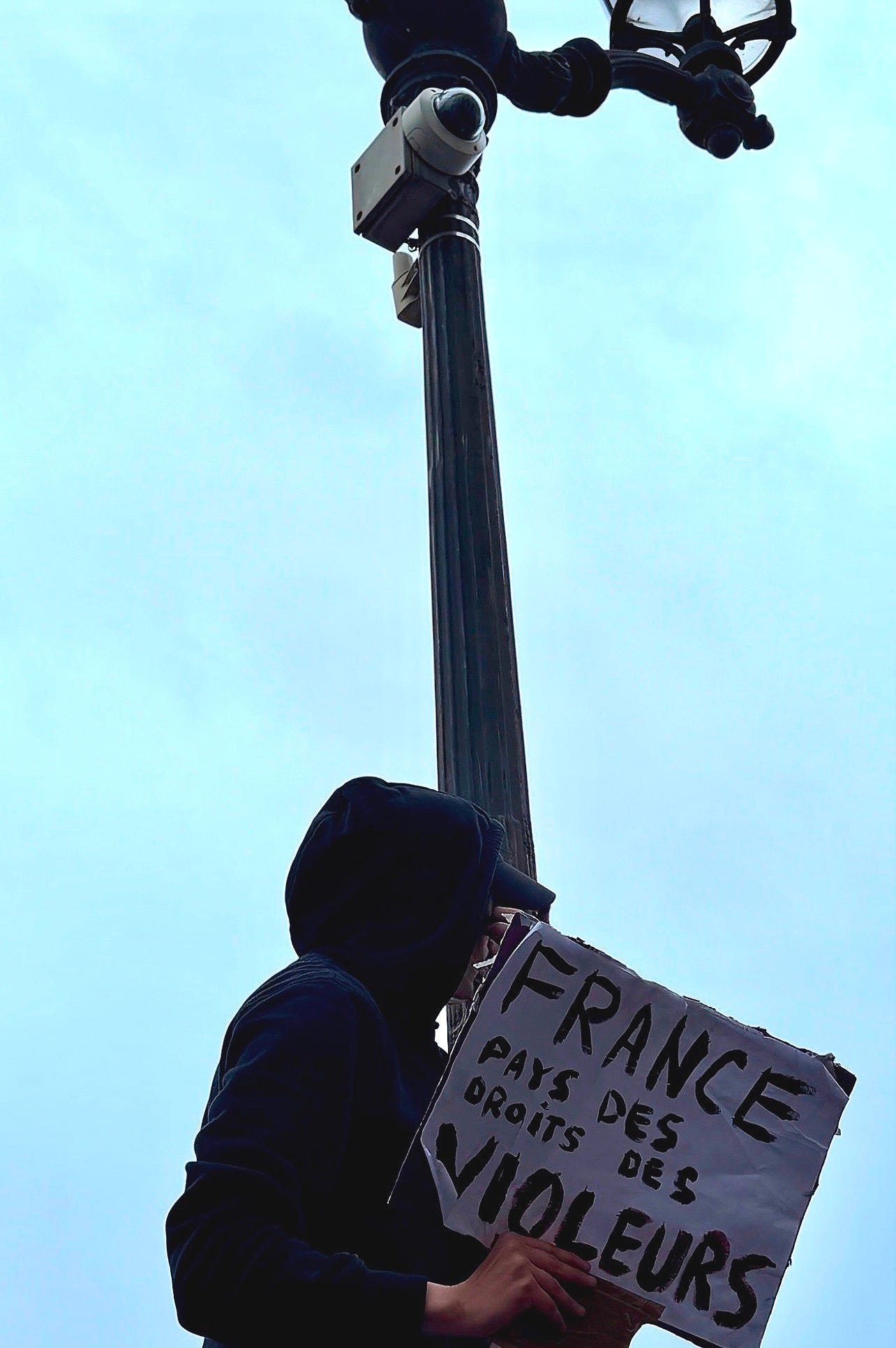
A country that proudly calls itself le pays des droits de l’homme (the homeland of human rights) cannot afford to look away when children are telling adults they are in danger.
The question facing France today is not whether it remains a great cultural power. It is whether it is willing to apply the same moral seriousness to protecting children that it applies to protecting its ideals.
Bravo Monica! Everyone in France with a voice should be highlighting this issue it’s an absolute disgrace how we’ve let these families and children down through the years
Thank you for saying what so many people are unwilling to talk about.